
The Peter Principle—where employees rise to their level of incompetence—can silently erode team performance and morale. Here, we unpack content from Bali Business Review to highlight core data, a painful real-life example, and steps organizations can take to detect and reverse this pattern.
Hi, I’m Jason, a Business Journalist at Bukit Vista, and I’ll be unpacking analysis from Bali Business Review. Today, we’ll dive into The Peter Principle to offer clear, data-driven insights.
Defining the Peter Principle and Its Organizational Consequences
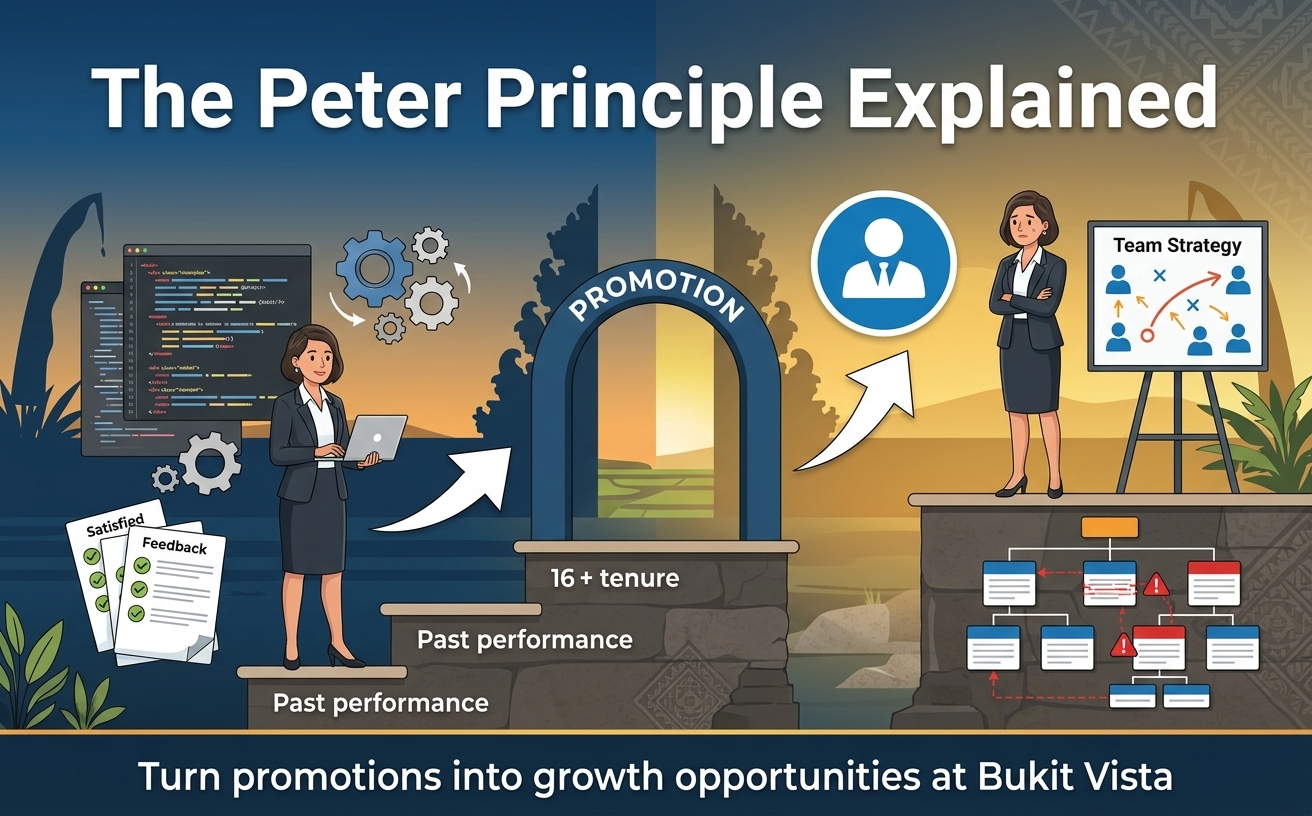
The Peter Principle describes a common progression in hierarchical organizations where skilled employees are promoted based on success in their current role until they reach a position where they are no longer competent. This mismatch between past performance and future job requirements creates bottlenecks: decisions slow down, oversight weakens, and team confidence erodes.
Understanding the mechanism is critical because promotions reward domain expertise, but leadership roles demand different capabilities—people management, strategic thinking, and coordination. Recognizing the Peter Principle early helps turn promotions into opportunities for growth.
How the Pattern Emerges: Causes and Early Warning Signs
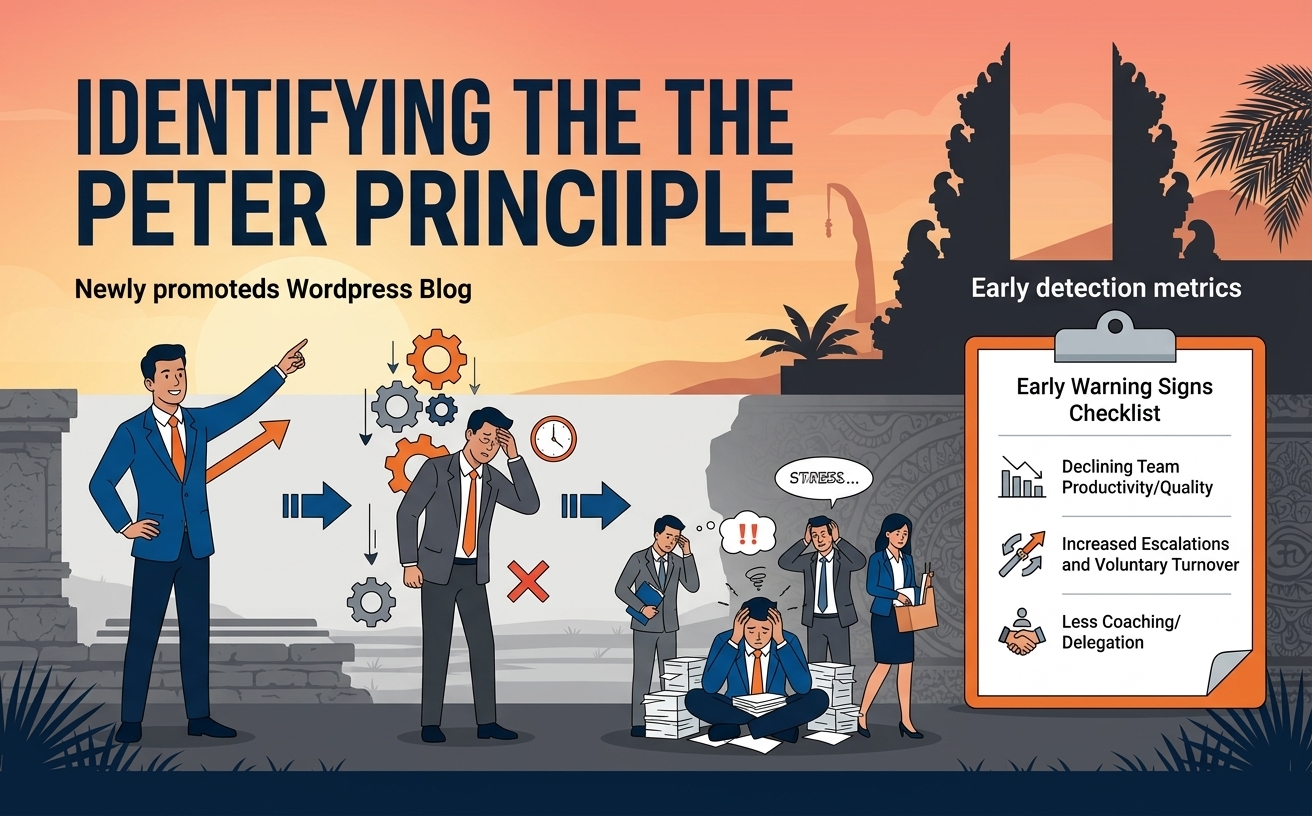
This principle usually stems from mismatched selection criteria and weak role-transition support. Organizations overlooking skills required for leadership often suffer. Early signs include missed deadlines, rising complaints, and a shift to reactive approaches.
These symptoms compound if unaddressed: disengagement ensues, teams lose momentum, and knowledge leaks as frustrated performers leave. Indicators require reassessment of role expectations, training, and support mechanisms.
Checklist: Early detection metrics
- Changes in productivity and quality metrics within three months of promotion.
- Increased frequency of escalations to senior management.
- Rising voluntary turnover among direct reports.
- Feedback showing declines in coaching or delegation behaviors.
The Painful Real-Life Story and What It Reveals
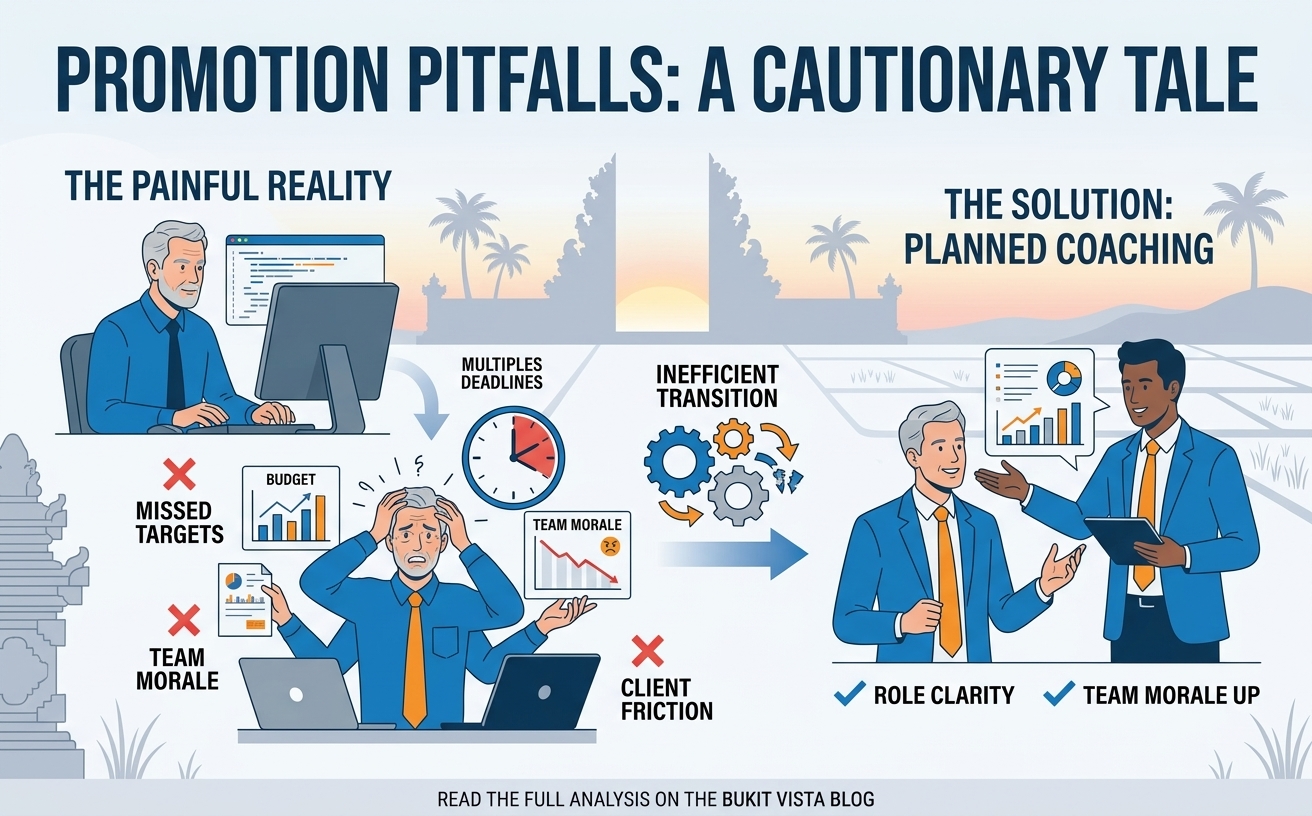
Bali Business Review highlights a case where a top-performing specialist was promoted to a managerial role with minimal onboarding. Within months, operational inefficiencies spiked as budgets were missed, client relationships frayed, and team morale plunged.
The story underscores the importance of designing promotions as transitions requiring targeted investment in skills, role clarity, and performance metrics aligned to new responsibilities.
Practical Strategies to Prevent Promotions from Becoming Pitfalls
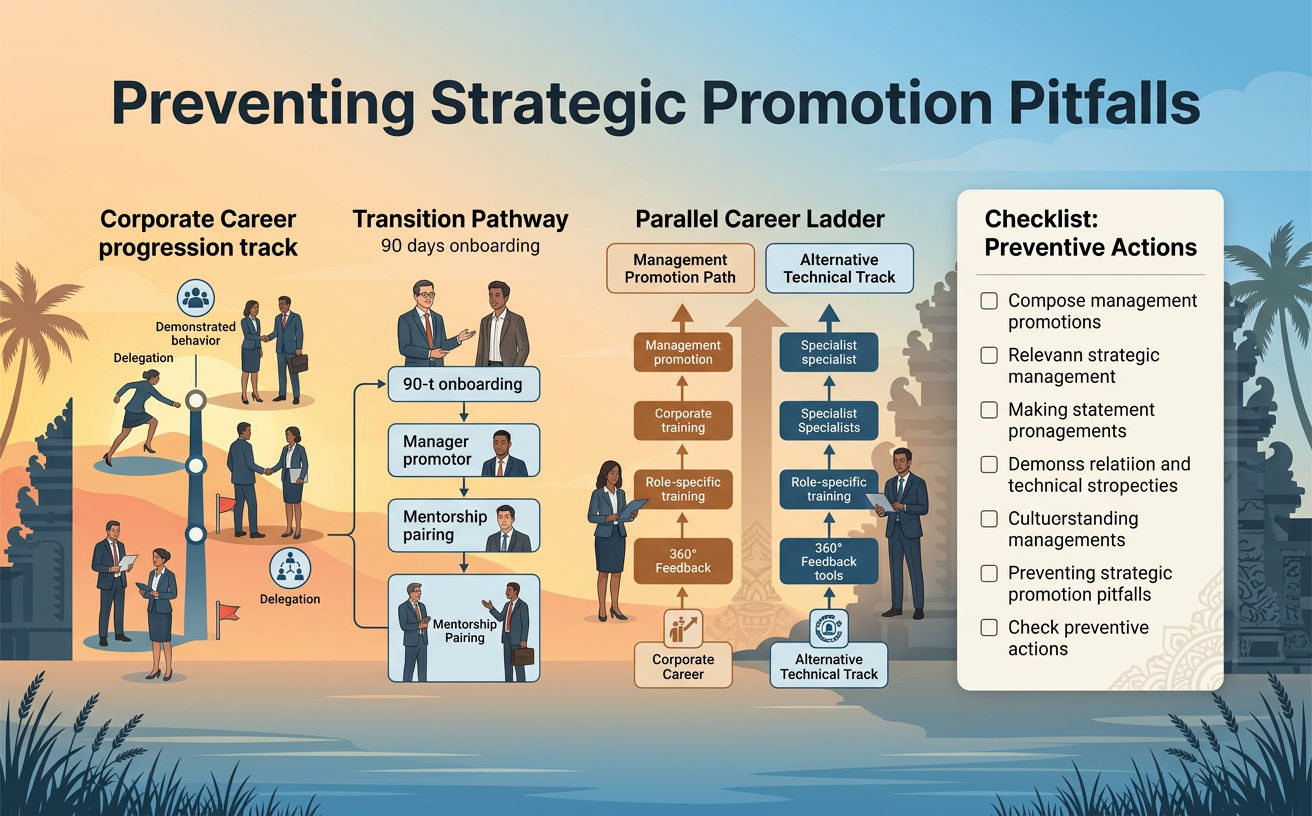
Redesign promotion criteria to include leadership behaviors and judgment skills. Structured transition plans—90-day onboarding for managers, mentorship, and training—reduce risks of incompetence.
Creating parallel career ladders rewards technical excellence without forcing a move into management, preserving expertise while offering advancement opportunities.
Checklist: Preventive actions
- Create leadership competency frameworks for promotions.
- Implement structured onboarding and mentorship for promoted staff.
- Establish alternative senior technical tracks to retain experts.
- Use 360-degree feedback in promotion decisions and post-promotion reviews.
Remediation: How to Fix a Peter Principle Situation

If performance declines post-promotion, remediation should focus on alignment. Conduct transparent reviews to identify gaps and set development goals, and offer coaching or role adjustments.
Organizations can redistribute managerial tasks among a team to minimize disruption while preserving dignity and institutional knowledge, sending a signal that fit and development are valued. Successful remediation reduces churn and restores team effectiveness.
Key Takeaways
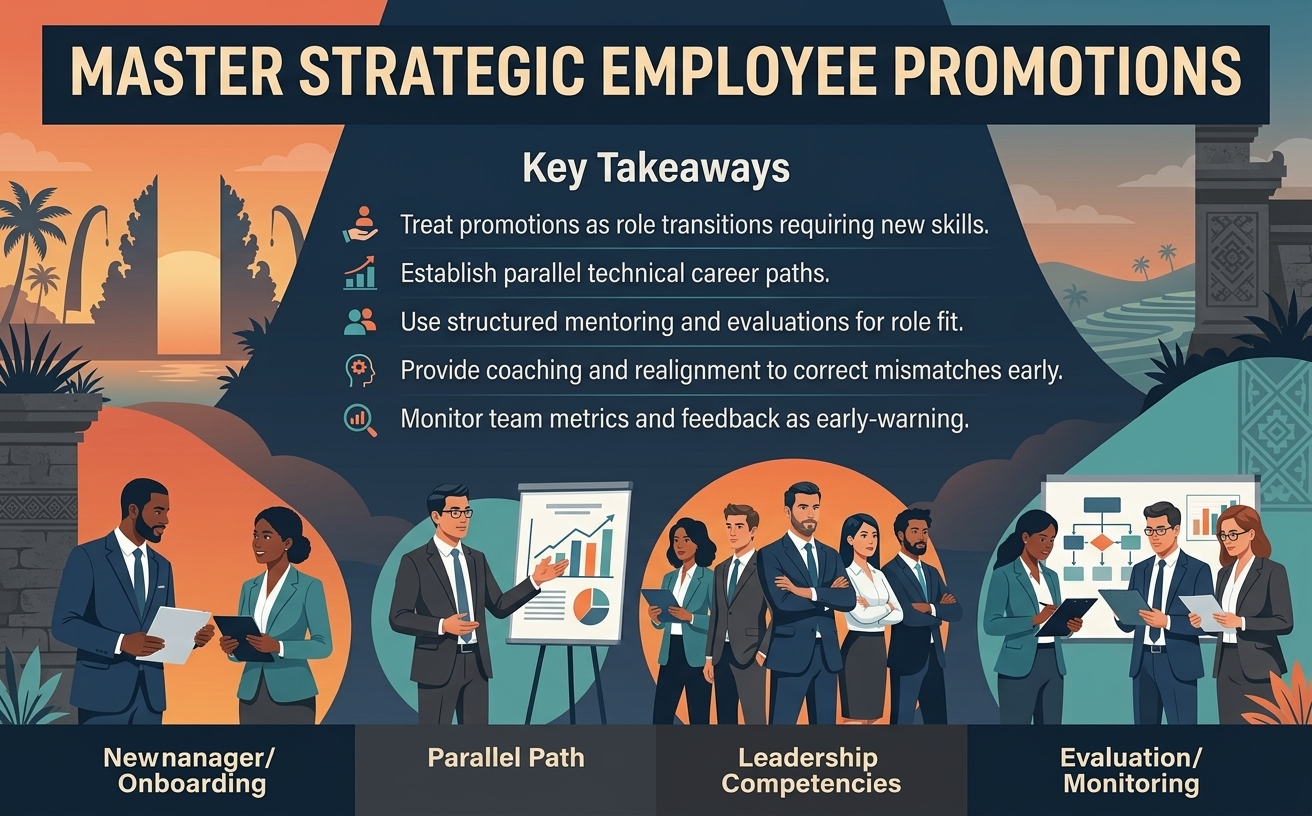
- Promotions should be transitions requiring new skills, not automatic rewards for past performance.
- Establish competencies and technical paths to reduce forced managerial moves.
- Use onboarding and mentorship evaluations to correct mismatches early.
- Focus remediation on coaching and realignment to preserve talent and reduce costs.
- Monitor team metrics and feedback as early-warning systems for declines due to promotions.
The Peter Principle is a predictable risk that becomes manageable when leaders align promotion criteria with required skills. Combining smarter selection, structured transitions, and humane remediation converts promotions into sustainable talent multipliers. For the primary source and full segment, view the original on YouTube and consider these insights.
Jason, Business Journalist at Bukit Vista
You’re a property owner? Wondering What Could Your Bali Villa Really Earn?
Get a data-driven revenue projection based on your property type, area, and bedroom count. Discover your villa’s true earning potential in Bali.